Latest News

MANCHESTER – Still the hotspot for appeal, Investment and returns

Buying a property has always been all about location and choosing the right spot can be crucial in getting the best investment for your money. Manchester is now one of the UK’s top property hotspots despite the COVID-19 pandemic, all thanks to its significant role in the Northern Powerhouse and the substantial investment the city’s seen, both in the centre and throughout the suburbs. Manchester has long been one of the strongest property markets in the north, but its resilient construction sector has meant that is now a secure place to invest your money in bricks and mortar. The city is vibrant. and fast becoming a desirable place for young professionals due to its strong jobs market, extensive levels of development and in the future, its integration with HS2. The Manchester Housing Market has seen one of the busiest housing markets over the last year, with house prices rising by a massive 6% year-on-year, higher than the national average of 4.3%. Even throughout the pandemic there has been strong demand for houses in Manchester as people leave London behind in search of better value further north, and this has led to a surprising amount of activity in the housing market. This current demand for property will also be fuelled by the stamp duty holiday that allowed significant savings. As the economy begins to re-open as restrictions end, it is likely that there will be increased confidence, and those who had put moves on hold now put their property on the market. For those looking to buy in Manchester, they can expect to pay an average property price of £213,000 compared with the £320,000 average across England and Wales. A Manchester detached house could cost as much as £371,000 whilst a semi-detached property comes in at £223,000. Detached properties are seeing the sharpest rise in prices currently as wages rise and more families locate to the city. Flats in the area are worth around £172,000 and terraced properties fetch in the region of £153,000.   Traditionally, house prices in Greater Manchester have stayed well below the national average, but they are experiencing a positive upwards trend. They also sit comfortably beneath nearby Cheshire and Derbyshire, which further adds to the city’s appeal. Here at Global Investments, we have recently launched the sales of Manchester Waters, Stunning architectural development of 742 apartments across five residential towers. Conveniently located within walking distance to Manchester City Centre and Media City UK offering luxury apartments form £130,000 with 6% guaranteed return form five years. The Appeal, Manchester has a great many things going for it, but its tough construction sector has proved attractive. Despite the closure of many building sites during the lockdowns, an impressive 35 residential schemes were still completed during 2020. There are now in excess of 12,000 residential units under construction with yet more development in this area expected in the next few years. It wasn’t just residential construction that saw a boom in Manchester either, as nearly 700,000 square feet of office space was also completed last year, with another 10 schemes in the planning stages. Whilst many have now turned to working from home, Manchester has shown that there is still a strong demand for office spaces. All of this means that the jobs market in Manchester is a strong one, with many big names relocating up to the area from down south. There has also been significant growth in the tech and start-up sector, providing young people with a fresh pool of career opportunities. Whilst the Manchester property market is a fluid one, it still offers great value for money for most investors. Whether you are looking for a buy to let investment or somewhere to make your home, this city offers huge promise in terms of its job opportunities, cultural enrichment, and profitability in the properties that you can buy. This article gives credit to www.propertypressonline.co.uk and www.ManchesterEveningNews.co.uk

Read More »

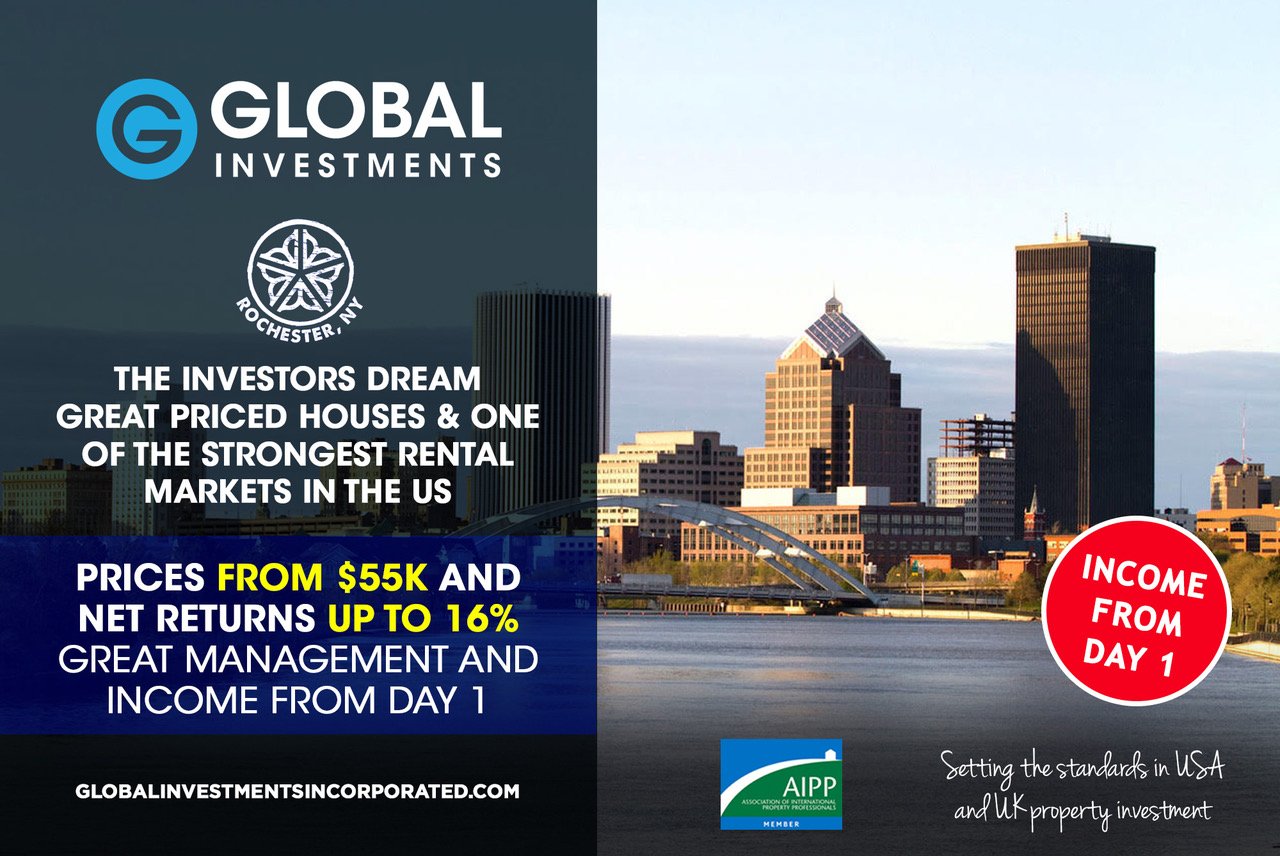
The Rental Market in Rochester & Why an increasing amount of people choose to live in Rochester, NY

Across the largest cities in the USA, rents have been growing at a slower pace since the onset of the COVID-19 pandemic early last year. In January, this slowing trend may have found its bottom, as a more optimistic outlook on 2021 has set in with continued news of relief and vaccines. Rents at the national level, calculated by averaging the top 50 largest metros, are still growing below pre-COVID rates. The median rent in January was $1,442, up 0.8 percent year-over-year. In March, rents were growing by 3.2 percent year-over-year. Rent growth may have found a floor, as January marks the first month since July where the trend has not slowed compared to the previous month. Some markets are seeing rents grow by double digits. Rents are rising in many of the same markets where home prices are rising. Many of the same factors that attract homebuyers — good schools, job opportunities, affordability, and more — attract renters, and the rental trends reflect that reality. Metros such as Rochester, NY  which is one of the region’s topping the list of largest year-over-year rent growth.  Also among one of the metros with the fastest-growing home prices. The expensive markets of Los Angeles and San Francisco are driving renters to more affordable housing further inland. And with working-from-home as the new normal, Rochester offers more affordable options without sacrificing too much in terms of proximity to the major hubs. This welcoming town south of Lake Ontario was known as Flour City in the 1800s, thanks to many flour mills located along waterfalls on the Genesee River. Then, when nurseries and seed production replaced the grain industry, it switched monikers to the very lovely sounding Flower City. These days, this upstate town is best known for its world-class educational institutions (like the University of Rochester), many parks and frequent festivals. Locals enjoy a low cost of living, with U.S. News giving Rochester a score of 7 out of 10 in its value ranking, noting that “Rochester offers a better value than similarly sized metro areas when you compare housing costs to median household income.” The organisation also ranked Rochester as number two in best places to live in New York, and last year, realtor.com ranked the city number six on its list of hottest real estate markets in the country ! As Bloomberg recently reported, many native New Yorkers are fleeing the Big Apple for the safety and security offered by smaller cities like Rochester. .Over the last 12 months, the cost of leasing a one-bedroom dropped by almost 22 percent in New York City and more than 19 percent in Boston, bringing their median rents to $2,350 and $2,020, respectively. Closer to home, the median for the Buffalo market fell by just a hair over 7 percent, to $1,050. By contrast, the median rent for a one-bedroom apartment in the Rochester area last month was $1,010, 4.1 percent higher than a year earlier. The Greater Rochester Association of Realtors has found that not enough homes are for sale in the Rochester metro area to meet current demand. The shortfall has helped drive up the median price of a home to $161,000, a 9.2 percent increase over 2020. These statistics based on an incredibly tough year shows why Global Investments have decided to move into the Rochester market. If you would like more information regarding properties in Rochester upstate New York then please email the team at : [email protected]

Read More »

Downtown Milwaukee is booming

According to the Milwaukee Business Journal  Milwaukee is in the middle of a construction boom. Major investments in  districts, hotels, The Hop streetcar, office and residential buildings, and highways reflect the innovative vision adding to Milwaukee’s ever-changing cityscape   There are so many new developments taking place in Milwaukee it would be impossible to cover all of them in one article but here is a snippet of some of the main ones that are changing the City landscape.   New business and financial developments:   The Wisconsin Center is preparing for expansion, bringing Milwaukee’s convention center to an anticipated 480,841 sq. ft. total convention center space. BMO Harris Bank’s construction of a $137 million 25-story office building near City Hall is nearing completion. Grand Avenue Mall is being transformed into The Avenue with office and retail space including the 3rd St. Market Hall and Hub640.    Hotels:   JR Hospitality Group is creating a new hotel complex under the Holiday Inn Express brands. The Milwaukee Athletic Club, former Wisconsin Avenue School, and Humphrey Scottish Rite properties are being renovated and turned into new hotels.   The Hop:   Milwaukee’s streetcar, The Hop,  is extending to Wisconsin Avenue, creation of a plaza on the corner of Vel Phillips and Wisconsin Avenues, expansion into the adjacent Bronzeville and Walker’s Point neighborhoods, and routes to the lakefront and Fiserv Forum.   Gateway Project: A multi-million dollar project upgrading roads and park areas to improve connections between the lakefront and downtown Milwaukee.   Amphitheater:  Summerfest completed construction of the new 22,000-seat American Family Insurance Amphitheater opening during the 2020 festival season.   Revitalized Districts:   Built on the 30 acres surrounding the new Fiserv Forum arena, the Deer District is Milwaukee’s downtown sports and entertainment hub. In the new Brewery District, businesses such as Best Place at the Historic Pabst Brewery, The Captain Pabst Pilot House, The Brewhouse Inn & Suites, and NO STUDIOS have repurposed the historic Pabst Brewing buildings.   All of this development has coincided with a huge increase in property sales, a record 10,450 homes sold in the Milwaukee area during the first half of the year, housing sales were up 15.3% for the first six months as compared to last year.    GMAR President Mike Ruzicka stated that the systemic problem with the market is the lack of new construction of single-family houses and condominiums. The number of homes listed for sale in the region is up. But the inventory of available listings is at about 3 months. A balanced market has about six months of inventory. If the City does not create additional supply in the form of more single-family homes thousands of would-be homeowners will be forced into rental units.   Throughout the last two decades, the city has begun to make strides in revitalizing its neighborhoods around Downtown that used to house Milwaukee’s economic engines. Areas like the Third Ward and Menomonee Valley have converted former warehouses and factory buildings into office and residential mixed-use buildings, while incorporating new entertainment venues like the 381-room Potawatomi Hotel & Casino. The surge in activity has created a domino effect on Downtown and has made it an ever popular place to live, work and play.      It’s an exciting time in the city and this new growth promises even better things to come over the next five years, It doesn’t matter how you measure it  Downtown Milwaukee is booming.   If you would like more information on our Milwaukee properties please email [email protected]

Read More »

Global Investments talk about the UK Property Market

This month we are looking at what’s happening in the UK Property market. Savills are predicting in a recent report more growth to come in 2021 and a soft landing in 2022 with UK mainstream house price growth forecast +9% in 2021. The average UK house price has continued to rise strongly in 2021, increasing by +5.6% in the first six months of the year according to the Nationwide index. The signs are the market looks set to maintain growth for the second half of the year meaning Savills expect annual house price growth across the UK as a whole to end 2021 at 9%, and with transactions to exceed 1.6m for the first time since the credit crunch Savills also expect transaction levels to diminish gradually over the remainder of this year as government support for both the housing market and the wider economy is withdrawn. However, the pace at which sales continue to be agreed suggests that national transaction levels will still end the year at circa 1.62m. That is roughly 35% higher than the average for the five years prior to the pandemic, despite an acknowledged shortfall of available supply to meet demand. A soft landing seems likely. The pace of economic recovery means unemployment levels have been contained and are forecast to progressively return to pre-pandemic levels and Interest rate rises are still expected to be gradual and modest, meaning a progressive squeeze on affordability. Together, Savills believe, this means there does not appear to be a trigger for a major house price correction. Ultimately, the pattern of growth over the period 2022–2025 depends on the extent to which the market normalises and what this means for price growth next year. While at this point, we are forecasting price growth of 3.5% next year, we could still see some of the growth generated by the extraordinary market conditions of 2020 and 2021 unwind at times during 2022. Regionally we continue to expect the markets of the Midlands and the North of England to show the strongest price growth as has occurred historically at this point in the housing market cycle, due to greater capacity for growth before hitting affordability ceilings. However, in the short term, we do expect some of the buyer focus to shift back towards urban markets, including London, as social distancing restrictions and international travel restrictions ease. This will see the ratios of regional to UK average values slowly converge over the next five years, as the lower value regions see stronger growth, ‘catching up’ with the rest of the country. This is what we’d consider typical late cycle behaviour. At the end of the day house prices and yields, have traditionally increase over time in England, with a stable economy and government. The World looks to invest here, and this will likely continue. Global Investments offer several ‘off plan’ and ready property investments in the Midlands and the North of England including apartments in Liverpool, Manchester, and Birmingham, some with guaranteed returns. Also on offer are Freehold Houses in the Northeast, refurbished and offered to market with tenants in situ. If you are interested in investing in UK Property and would like to know more, please contact us. Source: Savills Research using Land Registry and Nationwide

Read More »

The Preston City Centre Social and Business infrastructure is forecast to grow by £1bn over the next decade

Global Investments have recently started to offer the latest property investment offering in Preston, ‘The Exchange’ an exciting new development situated in the City Centre. Developed by The Heaton Group who have been developing for 45 years through 5 generations of The Heaton Family, The Exchange property investment comprising 200 stylish apartments offers a new standard of premium modern living to the local rental market. The development is Fully funded by HS Credit which is a subsidiary of a large international funding group called Hap Seng (market cap £4.5bn) Last year rents in Preston rose by 4% almost double the national average. Preston is flying, just check out some of these figures! Surely now is the time to be part of this continuing success story? The ‘Tempest programme’ of developing a future Combat Air system brings together UK Ministry of defence, BAE systems, Rolls Royce and MBDA UK is expected to generate at least £7.9bn GVA. The programme will support on average 5,000 highly skilled jobs per year directly employed on the programme and in the first tier of the supply chain. Providing productivity 31% higher than the Northwest manufacturing average. High Speed Two (HS2) is coming, the Government’s planned new high-speed railway, which will connect the North of England and Scotland with the Midlands and London. High Speed Two Limited (HS2 Ltd) is the company responsible for developing and promoting the new rail network. In July 2017, the Government confirmed the route for the next phase of HS2, known as Phase 2b, including a ‘western leg’ section running north from Crewe to Manchester and connecting to the West Coast Main Line near Wigan. HS2 Ltd has been developing designs to include changes to existing stations, including Preston, that will need to be made so that services can run along the West Coast Main Line to and from Scotland. Phase 1 target completion is 2026 (1 year of testing included) and Phase 2 target completion ranges from 2027 to 2033 (including 1 year of testing). At Preston the extension of the station will be complete in 2028 and open in 2029. It is expected four HS2 trains an hour will serve Preston station when Phase 2b is completed. Changes at the station will be made to accommodate the trains which will be up to 400 metres long. Two platforms will be extended and a new platform on the western side of the station will be built. The benefits of high-speed rail will be felt in Preston before this work starts, as new services will be introduced when trains start running on Phases One and 2a of HS2 between London, Birmingham, and Crewe. When these first phases open, services will run south from Preston on the existing railway to Crewe before joining the new high-speed railway to London and Birmingham. The Preston City Centre development ‘The Exchange’ due to complete in 2023 will offer to its residents an onsite Gym, Concierge, residents lounge and roof garden. With prices starting for apartments from around £131,000 for a one bedroom, £216,000 for a two bedroom and £234,000 for a three bedroom ‘The Exchange’ is very competitively priced with rental returns of 6% net. If you would like to consider adding ‘The Exchange’ Preston City centre to your property portfolio, contact us at Global investments to explore the options available. For further details on The Exchange and other UK property Investments please contact Ian Pask at [email protected]

Read More »

Is the USA housing market overheating ?

A few months back we did an Article on the predictions of the US housing market for 2021, we stated that inventory levels are running at an all time low and prices were beginning to rise.   Fast forward six weeks and now we see a housing market staring to really heat up, some have stated the market is on fire at the moment. In nearly every US city right now, homes hitting the market are sold within hours not days, we have started to see bidding wars and the Buyer with the most cash wins.    After large gains over the past five years, the nationwide nominal house price index is now 40% above its 2012 low-point and 4% above the peak reached in 2006.   The circumstances contributing to today’s booming housing market are very different from what precipitated the last boom and bust cycle, there are few places where real debt per capita has increased over the past few years   So why is this happening now ? surely this boom can not all be accountable to a resurgence after a global pandemic ?    It is a combination of unique factors that  are coming into play at the same time.   First of all you have the issue of new built property, these have not kept pace with the growth of population since the 1920’s, it is in constant catch up mode.   Then you have a change in Buying patterns, professionals and individuals who can work from home are buying homes to work at home and are therefore changing housing preferences. Another recent trend over the last 12 months is the shifting geography of housing demand to lower-density markets and historically low interest rates. Many people moved from city dwellings to suburbia as we all learned to adapt to the online business world.   You also have the Millennials, tens of millions of Millennials have simultaneously entered the market looking for their first property, this has happened right across the US and is one one main factors leading to bidding wars, they are creating a nationwide generational housing supply shortage.   On the Buyers side you are also seeing low mortgage rates which means the market is healthy for buying. Paul Lueken the chief executive of Draper and Kramer Mortgage Corp stated “As the Covid-19 vaccine is distributed, the economy will begin to open up and recover. Economic activity will most likely return to pre-pandemic levels by late 2021 or early 2022. The Federal Reserve will continue to support a low interest rate environment for much of 2021, and mortgage rates can be expected to remain low for most of the year. Home sales will therefore stay strong due to the low interest rates and the recovering economy”   You also have a change in buying behaviour been fuelled by technology, you can apply for mortgage online, purchase you property online, order your inspection online and close your property online, buying a property is becoming more virtual and easily accessible.   So what does all of this mean for investors ? Is this a temporary bubble that could burst or are we facing long term shortages and increasing prices ?   To answer the unknown is obviously very difficult but we can look what other property experts are saying.   Cision Newswire ran an article recently named “Redfin Reports Home Prices Surge 17% Amid Historic Housing Shortage” in the article it made reference to how Redfin worked on a metric system to show how the market in increasing so quickly, they compared metrics to 2020.   Metrics to compare to 2020:   *Asking prices reached an all-time high of $353,750.   *Homes that sold during the period were on the market for a median of 23 days, the shortest time on market since 2012. This was 15 days fewer than the same period in 2020.   *43% of homes sold for more than their list price, an all-time high. This was 17 percentage points higher than the same period a year earlier.   *The average sale-to-list price ratio—which measures how close homes are selling to their asking prices—increased 2.1 percentage points year over year to an all-time high of 100.7%, meaning the average home sold for 0.7% more than its asking price.   *59% of homes that went under contract had an accepted offer within the first two weeks on the market. This is a new all-time high (Redfin’s data for this measure goes back to 2012).   *46% of homes that went under contract had an accepted offer within one week of hitting the market, an all-time high.   They also stated “Demand for Second Homes Is More Than Double Pre-Pandemic Levels” “The combination of the wealthy becoming wealthier, remote work turning into the new normal and low mortgage rates is creating an ideal environment for affluent Americans to buy vacation homes,” said Redfin Chief Economist Daryl Fairweather. “As long as the economy continues to grow, I don’t foresee demand for second homes slowing down anytime soon.   All of which means that even if America’s housing market keeps breaking its own records in the short term, says Redfin’s Marr, it’s also fueled this time around by factors far different than the bubble that preceded the mortgage backed securities crash of 2008.   So therefore if it will not be another crash what will cause a slow down in the future, what will it be ? prices can not keep going up for forever.   There is no certainty to this answer but looking at other over heating housing markets we have seen that mortgage rates will tend to increase which will slow down home appreciation, this normally brings prices back in line with current salaries.   Overall we are in a better position than before the Crash of 2008 which is great news if you are thinking of buying a property now, you just need to battle through getting the right property at the right price and not enter a bidding

Read More »

The Cleveland Real Estate Market 2021

Cleveland Ohio has been the best selling product for Global Investments for the past 3 years and is still going strong with a huge demand by both overseas and domestic investors. More than 50% of the households in Cleveland are occupied by renters, making the market perfect for rental property investors. Many recent reports have Cleveland as no.5 on the list of top housing markets to watch in 2021. The real estate market in Cleveland is competitive, with some homes going under contract the same day they are listed. One reason homes are selling quickly in Cleveland is that prices here are still very affordable, with the median listing price for a home in Cleveland only $100,000. Global Investments work with some of the top turn key suppliers and have available renovated and tenanted houses from as little as $55,000. The diversified economy helps keep the rental market strong in Cleveland. For a city that once relied on the manufacturing industry for growth, Cleveland has done a remarkable job of transforming its economy into a well-balanced blend of service, high tech, blue and white collar employment. Located along the southern shore of Lake Erie, Cleveland is just across from the Canadian border. The metro area is home to the Rock and Roll Hall of Fame, one of the worlds finest orchestra and major professional baseball, football, and basketball teams. Here’s just a few reasons why Cleveland could be one of the best places to invest in rental property in 2021.  POPULATION GROWTH In its in-depth study, “The Fifth Migration: A Study of Cleveland Millennials”, the Cleveland Foundation reports Cleveland ranks among the top 10 U.S. cities for population growth of college-educated millennials. That’s great news for rental property investors, because as CNBC recently noted, rental demand across the country is soaring as more millennials say it’s cheaper to rent than to own. Key Population Stats: Cleveland has a city population of nearly 400,000 and a metropolitan population of more than 2 million, ranking Greater Cleveland as the 33rd-largest metro area in the U.S. Population of Cleveland has declined 0.09% year-over-year. Net migration in Cleveland has remained steady, decreasing by only 870 residents since 2018. The median age of people in Greater Cleveland is 41, with about 37% of the population between the ages of 20 and 49. In the City of Cleveland, the median resident age becomes more youthful, dropping down to about 36 years. JOB MARKET  The unemployment rate in Cleveland is down to just 5.8% (as of Nov. 2020), according to the U.S. Bureau of Labor Statistics (BLS). As the economy in Cleveland continues to recover, job sectors showing the fastest signs of recovery include construction, manufacturing, and financial activities. While job growth in Cleveland has historically lagged behind some of the city’s peers, a recent report in Crain’s Cleveland Business notes that economic growth in Cleveland surpassed Tulsa, Albuquerque, and Memphis. The renewed focus on space exploration is good news for the fuel cell industry and the NASA Glenn Research Center in Cleveland. Companies with corporate headquarters in Cleveland include Applied Industrial Technologies, Cliffs Natural Resources, and Sherwin-Williams Company. The Federal Reserve Bank of Cleveland, one of only 12 Reserve Banks in the U.S., is in downtown Cleveland. Key Employment Stats: GDP of Cleveland is more than $118 billion, an increase of more than 12% over the past 10 years. Employment growth in Cleveland is 1.43% year-over-year, while median household incomes have increased by 7.08% over the same period.e metro area. The healthcare sector is one of the major employers in Cleveland, including the Cleveland Clinic, University Hospitals of Cleveland, MetroHealth, and Medical Mutual of Ohio. Biotechnology, fuel cell research, and technology are three of the growing employment sectors in Cleveland. In fact, Forbes recently speculated that Cleveland might become the country’s next technology hub. Despite the shift to professional service and high tech business, construction and manufacturing in Cleveland still account for a significant amount of employment growth. Nearly 3,000 new manufacturing jobs were created over the last couple of years, while the construction industry added more than 1,700 new jobs during the same period. Since 2009, per capita income in Cleveland has steadily grown and is now at $34,200 while median household income is $57,228. Nearly 32% of the adults in Cleveland hold an undergraduate degree or higher, about 10% higher than the rate in Ohio. Cleveland is served by five Interstate Highways and several freight railroads. The Port of Cleveland is a major bulk freight terminal on Lake Erie.  More than 5.8 million domestic and international passengers traveled through the Cleveland Hopkins International Airport (CLE) through the first half of 2019, while shipping facilities at CLE have handled more than 51,000 tons of cargo over the same time period.  Playhouse Square in Cleveland is the 2nd-largest performing arts center in the country, right behind New York’s Lincoln Center, and the Cleveland Museum of Arts is home to more than 40,000 works. Real estate investors who are pro sports fans will find Cleveland offers a winning combination: Major League Baseball’s Cleveland Indians, the NFL’s Cleveland Browns, and the NBA’s Cleveland Cavaliers. REAL ESTATE MARKET  Cleveland is ranked as one of the top housing markets to watch in 2021 by Forbes. The affordability of single-family homes in Cleveland is especially appealing to remote real estate investors and to people working from home. Successful real estate investors know how to make money in any market cycle, which is one reason people are investing in Cleveland rental property. Cleveland is one of the most recession-resistant markets in the U.S., according to Crain’s Cleveland Business.  When measured by the investment variables of home price volatility, home sales flips, average loan-to-value, and home price-to-income ratio, Cleveland ranks as one of the top four markets with the lowest risk of a real estate dip. Key Market Stats: Zillow Home Value Index (ZHVI) for Cleveland is $79,166 through November 2020. Home values in Cleveland have increased by 18.8% year-over-year and are forecast to grow by another 13.1% in the next 12 months. Over the past five years home values in Cleveland have increased by nearly 76%.

Read More »

What do the experts say about property prices and rental values in the UK?

Owning a buy-to-let property is not just about yields; understanding the potential for capital growth is also a key part of any property investment strategy. So, what do the experts say about property prices and rental values in the UK? Where are they heading over the coming years and which regions are going to be the stars of the show? The most recent projections were released in March 2021, with Savills commenting: “2021 will be a complex year, with competing forces having different impacts on the housing market over the course of the year. But government support, the easing of social distancing restrictions, and low interest rates underpin our forecast for 4.0% price growth.” That 4.0% growth sets the tone for the years to come, with Savills projecting it will increase to 5.0% in 2022. Overall, in the five years to 2025, the company forecasts mainstream capital value growth of 21.1% for the UK. The North West tops the table, again at a regional level, that growth will vary significantly over the years ahead. The third most populous region in the UK and home to cities including Manchester and Liverpool the North West is forecast to see growth of 28.8% between now and 2025. The North Easts projects are also at a good level estimated at 20.5% over the same five-year period. Speaking of yields Savills has also included mainstream rental values in its latest five-year forecast. While UK rents are forecast to rise by just 0.8% in 2021, the pace picks up significantly in 2022, when a rise of 4.5% is anticipated. So, what has happened so far in 2021?  We are already a quarter of the way through 2021. That means that figures are available to show how the UK property market has been performing so far this year. Nationwide’s latest figures show annual house price growth of 5.7% in the year to March 2021. Again, we see the North West leading the pack, with price growth of 8.2% over the same period. Regional variations in house price growth show the value of doing your homework and identifying the best UK region to focus on as part of your investment strategy. All indicators are undoubtedly pointing to the North of England right now. Looking at the longer-term picture, Savills projects that rents across the UK will increase by an average of 17.0% in the five years to 2025. Here at Global Investments (www.globalinvestmentsincorporated.com)  we have seen many investors have been opting for buy-to-let properties in the North East and West of England for some time as the area has established credentials in terms of its property market performance and wider economic backdrop. A centre for industry and dynamic growth, the North of England has plenty to offer investors looking for good value, strong capital growth and solid yields. If you would like to discuss the different property investment options available, get in touch. Source:  Savills UK | Residential Market Forecasts    House Price Index Headlines | Nationwide

Read More »

The 2021 US Housing Market Forecast – Up or down ?

The last 12 months has been a very difficult year for every industry, the US was hit hard and fear grew last March that real estate could collapse as everybody went under lockdown. But if you look at the last 12 months you will see that real estate has actually played a significant part in the economic recovery, 2020 turned out to be a record year with over 2.6 million homes sold during the pandemic. At the end of 2020 buyers were facing unprecedented competition and increasingly out-of-reach home prices.Real Estate Agents have had a full year to adopt to the new ways and with inventory at record low levels it looks like 2021 is going to be an even better year.Forbes magazine have just ran an article stating “A new long-term housing boom is upon us. And COVID-19 is the main reason why” They state in the article that both the housing and economic cycles have shifted to longer cycles, 10 year cycles, this is due to factors such as technology and monetary policy.Over the next 10 years different factors will push this cycle in an upward trend. Such as economic recovery from a global pandemic, forecasts of continued growth in the GDP, sustained low interest rates and most importantly low housing inventory levels due depleting supply since the last recession.Danielle Hale chief economist stated “We expect sales to grow 7 percent and prices to rise another 5.7 percent on top of 2020’s already high levels. While we expect mortgage rates to tick up gradually, sales and price growth will be propelled by still strong demand, a recovering economy, and still low mortgage rates.Robert Dietz, senior vice president and chief economist of the National Association of Home Builders stated “ With home builder confidence near record highs, we expect continued gains for single-family construction.One recent trend over the last 12 months is the shifting geography of housing demand to lower-density markets and historically low interest rates. Many people moved from city dwellings to suburbia as we all learned to adapt to the online business worldElana Knoller better.com stated  “Homeowners and the housing industry at-large will utilize technology even more next year to engage buyers and execute deals. 2020 changed the game in everything from touring properties to looking for and locking rates, and participating in secure eClosings”Professionals and individuals who can work from home are buying homes to work at home and are therefore changing housing preferences,” we want a study and a large garden”  Combined with record-low mortgage rates and forbearance programs, odds are the housing market will remain strong in 2021.Another big argument for this increased demand for suburban properties are the “Millennials” according to David Howard from the National Rental Home Council, it is theMillennials, who are transitioning squarely into prime household formation years.The fact is now there is light at the end of the tunnel from Covid 19 it is imperative Governments world-wide push the economy through incentives and breaks. Paul Lueken the chief executive of  Draper and Kramer Mortgage Corp stated “As the Covid-19 vaccine is distributed, the economy will begin to open up and recover. Economic activity will most likely return to pre-pandemic levels by late 2021 or early 2022. The Federal Reserve will continue to support a low interest rate environment for much of 2021, and mortgage rates can be expected to remain low for most of the year. Home sales will therefore stay strong due to the low interest rates and the recovering economy”Realtor.com‘s summarised all of these key points for the 2021 forecast:* Spring and summer home-buying seasons in 2021 will be strong.* The existing home sales will increase by 7 percent in the year 2021.* The rise of millennials will push the housing demand up. * The home prices will appreciate by 5.7%.* Single-family housing starts are now predicted to increase by 9 percent. * Low mortgage rates will keep purchasing power healthy * Buyers seeking affordability and space will drive interest in the suburbs.* The pandemic has merely accelerated this previous trend by giving homebuyers additional reasons to move farther from downtown.* Fast sales will remain the norm in many parts of the country which will be a challenge felt particularly for first-time buyersWhile everything seems positive on the sales front other websites are stating that lingering economic uncertainty may temper some of the predictions. They state that sources of economic uncertainty, including lapsed fiscal relief, the long-term fate of policies supporting the rental and mortgage market, and virus-specific factors must be taken into consideration.Overall we are still coming through a storm and whatever opinion you take on this forecast it looks like things will be getting back to normal soon and all industries will be pushing to make the economy even stronger than before the arrival of Covid 19. If you would like more information on investing in the US market please email [email protected]

Read More »

IS THE SUN SETTING ON THE CLEVELAND PROPERTY MARKET

As a company we have been selling investment properties in Cleveland Ohio for the past three years and it is by far our best selling product, accounting for over 70% for the companies sales and enquires from investors all over the Globe. However recently we have seen an upside in the prices and also a shortage of inventory indicating that with a large demand for these types of houses from the overseas market, sellers and suppliers have an opportunity to increase their prices. Also with the amount of overseas and domestic investors snapping up these types of properties we are also finding it harder to locate good inventory that meets our investors criteria. Unfortunately for potential or current investors looking at investing in Cleveland it looks like the clock is ticking. Prices are on the rise and the supply of these types of turnkey homes is down and finding good tenanted or renovated properties in good neighbourhoods is getting tougher. If you are looking at buying a house in Cleveland as a potential investment opportunity, in our opinion you must act now or certainly in the next 3-6 months to capitalise on these prices and returns while they are still around.  All indicators point to growing income, a solid job market, and increasing home values in Ohio. The Cleveland real estate market prediction is incredibly positive. Investors and home buyers will reap benefits when considering the city and its suburbs over the next 5 – 10 years hence the huge demand for these types of properties now.  Cleveland is home to just under 400,000 people. The larger metropolitan area is home to roughly two million people. That makes the Cleveland real estate market the 32nd largest in the country. If you include the Cleveland-Akron-Canton metro area there are three and a half million people in the “combined statistical area”, making it the 15th largest metropolitan area in the United States. This century old city was once a major manufacturing centre and now has reinvented itself as a medical and bio-med hub. “ We have been expecting this rise in prices and reduced supply for some time now. Very similar to what happened in Detroit 5-6 years ago. Cleveland is still an incredible opportunity for both the overseas and the domestic buyer but any client looking at getting involved needs to look at higher prices for these types of houses. The prices cant stay the same with such demand, lack of supply and huge investment into the city. These price increases were inevitable. “ I still think as a company we have another 12 months in the city before prices get too high. I think for a good, well located single family home any client should be looking at spending around $50k to $60k and for a well located Duplex they will need to look at between $60k and $80k. “ Mike Moodie CEO Global Investments Incorporated Although prices are on the rise Cleveland Ohio still offers an incredible opportunity for any cash buyer to get well priced tenanted houses with great cash on cash returns and good appreciation over the coming 5-10 years. If you would like more information on our Cleveland Ohio Investments or have any general questions on the US market place and what opportunities are available please contact any of the team at Global at [email protected]

Read More »

Compare listings

Compare